
Technical SEO is essential for Google rankings. It improves user experience and search engine crawlability by enhancing the site’s speed, structure, and mobile friendliness. Effective website optimization becomes complex as SEO evolves. SEO specialists need specialized tools to examine data, identify difficulties, and implement solutions. We strive to provide a thorough overview of technical SEO solutions that help improve website performance and search engine visibility.
Understanding Technical SEO
Technical SEO Services boost website visibility and search engine performance. Digital Destiny’s SEO specialists manage huge sites to maximize access and performance. Technical SEO Services optimize many website elements to increase organic search engine traffic. Site performance, mobile-friendliness, architecture, indexing, and other factors are crucial to its audit.
The Role of Tools in Technical SEO
Tools simplify processes and assist users in handling difficult activities in the modern world. Many tools for Technical SEO simplify challenging work. SEO specialists use these tools to diagnose faults, monitor performance, and optimize websites. They crawl websites thoroughly to index every page and find crawl faults that may affect search engine visibility. These tools include crawling, auditing, monitoring, and optimization.
Crawling and Indexing Tools
Web crawling is how search engines scan data for query-based results. Search engines utilize crawlers to find relevant info for any query. Basically, three prominent search engines, Google, Bing, and Yahoo, show results on browsers. So, they have crawler tools to examine updated website data. Creators utilize different tools for crawling. This online tool helps with crawling.
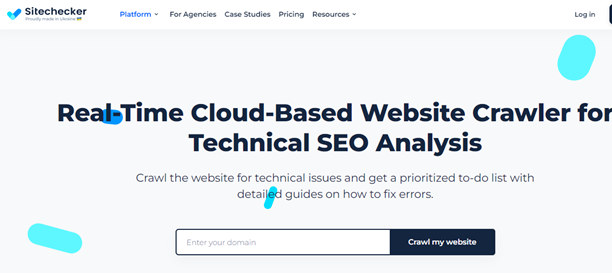
Image Source: sitechecker
However, it is important to crawl fast to show your efforts on search results for users. In this way, the top Crawling and Indexing Tools are below.
Google Search Console
It is a fundamental component of Google’s suite of webmaster tools, designed to help website owners monitor and manage how their site performs in Google Search results. In fact, it provides insights into how Google indexes and crawls your website. It also offers various tools and reports to optimize your site’s visibility in Google Search results and troubleshoot any issues that may prevent proper indexing.
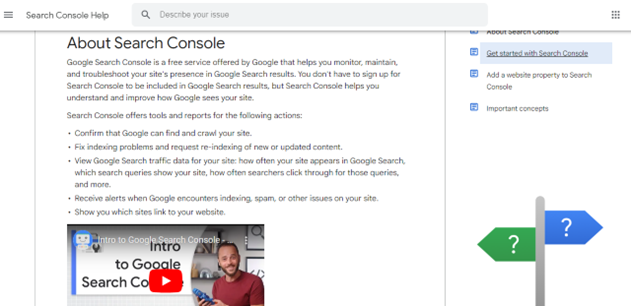
Image Source: Google
Basically, GSC helps web admins ensure their content is discoverable and accessible to users through Google Search. It’s a crucial tool for maintaining and enhancing your site’s SEO performance and overall web presence.
Screaming Frog SEO Spider
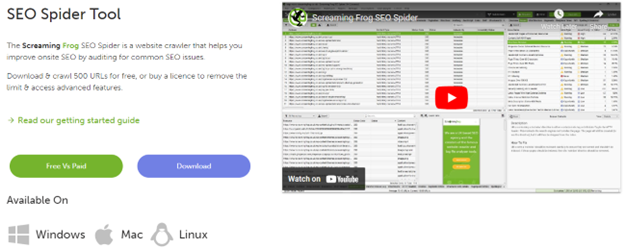
The Screaming Frog SEO Spider is a powerful tool used primarily for website analysis in the context of search engine optimization (SEO). It helps to improve and manage the auditing of any site. In fact, it is available in the shape of free and paid versions. In fact, it is an invaluable tool for SEO professionals and web admins alike, offering deep insights into website optimization and performance.
Source image: Screamingfrog
It crawls websites like search engines, evaluating URLs, titles, meta descriptions, headers, etc. In fact, it helps uncover broken links, backlinks, redirects, and other flaws in the website’s internal and external connecting structure. It retrieves and optimizes SEO metadata and verifies image alt attributes.
It detects duplicate, thin, and missing metadata, among other SEO concerns. Creates XML sitemaps from crawled material to improve search engine indexing: Integrates Google Analytics, Search Console, and other technologies for comprehensive analysis. Crawl speed, user agents, and crawl parameters are also available. So, schedule crawls to track changes and spot faults or improvements quickly. Filters help prioritize tasks by focusing on specific topics or data kinds.
Website Auditing Tools
Website audits pinpoint technical issues that could impact search engine crawling, indexing, and ranking. So, different tools can identify usability issues such as broken links or slow page load times. In fact, duplicate content, missing meta tags, and poor site structure can improve search engine visibility. Moreover, audit tools ensure that your site adheres to best practices and technical standards set by search engines.
Ahrefs Site Audit Tool
It Monitors over 130 technical issues affecting SEO performance. In fact, it Provides actionable recommendations for on-page optimizations. In this tool, crawlability and Indexability Analysis Checks for crawl errors, broken links, and issues with XML sitemaps.
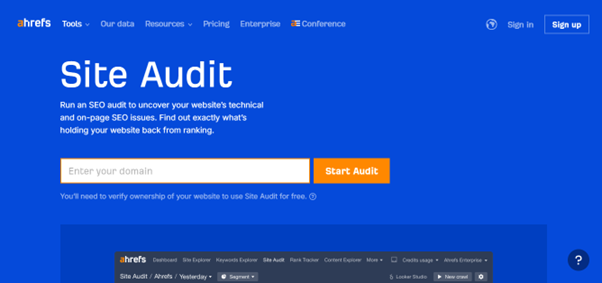
Image source: ahrefs
So, the advantage of this tool is it delivers detailed reports with prioritized tasks for improving SEO. Also, it integrates with SEMrush’s suite of tools for seamless workflow and analysis and tracks changes over time to evaluate SEO improvements.
SEMrush Site Audit Tool
Semrush monitors over 130 technical issues affecting SEO performance. In fact, it Provides actionable recommendations for on-page optimizations. In this tool, crawlability and Indexability Analysis Checks for crawl errors, broken links, and issues with XML sitemaps.
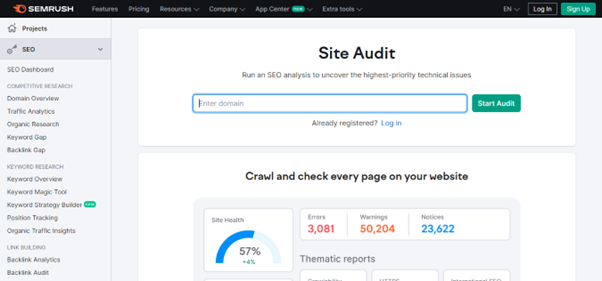
Image Source: semrush
So, the advantage of this tool is it delivers detailed reports with prioritized tasks for improving SEO. Also, integrates with SEMrush’s suite of tools for seamless workflow and analysis and tracks changes over time to evaluate SEO improvements.
Moz Pro Site Crawl Tool
It Crawls 3,000 pages every audit to find SEO flaws. Sorts issues by severity and SEO impact. Customizable reports for SEO metrics. Improves technical SEO with actionable suggestions. Assess your site’s performance against competitors to improve.
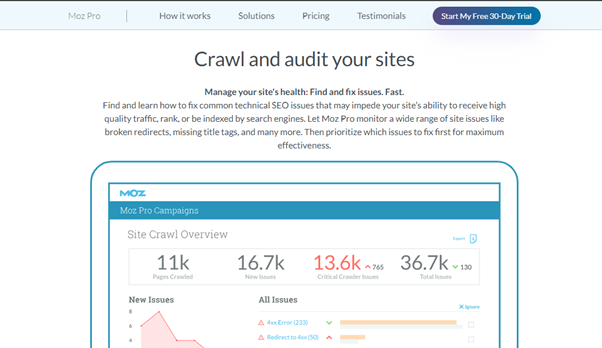
Image Source: moz
Moreover, it tracks progress and evaluates fixes. Improves SEO ranks and visibility with insights. Provides an easy way to navigate and comprehend audit results.
Performance Optimization Tools
Optimizing the performance is important because faster loading times improve user satisfaction and reduce bounce rates. In fact, improved performance often leads to higher conversion rates and engagement. It is essential for providing a seamless experience across devices. So, here are different site speed and performance tools.
Google PageSpeed Insights
Your website’s mobile and desktop versions receive scores. It reveals performance issues affecting speed and usability. It recommends picture compression, CSS/JavaScript minification, and browser caching. This tool provides Google’s best practices, aligned insights, and clear performance improvement steps from Google’s investigation. Performance is assessed using field user data.
GTmetrix:
According to Digital Destiny LLC expertise PageSpeed and YSlow scores measure performance. It visualizes element loading times to identify bottlenecks. The page-loading process is filmed for examination. Various performance parameters are scored. It suggests ways to boost speed and performance. It tracks performance over time using historical data. Compare performance before and after optimizations to measure improvement. Also, prioritize repairs by loading time and score. Analyze load order and find delays.
WebPageTest:
It tests extensively across many browsers and regions. Customize test factors like connection speed and browser type. In fact, it displays performance data and waterfall charts. Moreover, it details loading times, content breakdown, and performance bottlenecks. It also evaluates regional loading times from global locations. It tracks TTFB, start render time and other advanced metrics.
Mobile-Friendliness Testing Tools
Technical SEO relies on mobile friendliness to provide a seamless and responsive user experience as mobile usage rises. Google ranks mobile-friendly websites higher in mobile search results. Additionally, mobile-friendly sites have higher conversion rates and lower bounce rates.
Google Mobile-Friendly Test:
AcIt checks if a page is Google-mobile-friendly. This verifies that the viewport is properly adjusted for different screen sizes. It analyzes mobile usability and loading times. Enter the webpage URL to test. Get immediate mobile friendliness feedback and practical suggestions. Google’s mobile optimization guidelines are observed to ensure compatibility.
BrowserStack:
Testing is possible across browsers and devices, including mobile. It offers real devices for mobile responsiveness testing. In fact, it saves pictures and videos to analyze mobile performance. So, testing is possible on many mobile devices and OS systems. Compatible with debugging and code inspection tools.
Responsive Design Checker:
It simulates smartphones, tablets, and PCs and displays a webpage on numerous devices and screen sizes. So, switch between portrait and landscape views for thorough testing. It also shows responsive design breakpoints and modifications and instantly evaluates a webpage’s responsiveness across devices without device access. It verifies responsive design and finds layout flaws.
Security and HTTPS Tools
SEO relies on website security, especially HTTPS, which encrypts user-website data to protect privacy. This fosters user trust. HTTPS is a ranking indication for Google, giving secure sites a minor edge. For businesses looking to improve their online presence SEO Services in florida emphasize the importance of HTTPS. These Services prevents tampering and assures viewers receive the website owner’s intended content.
Qualys SSL Labs
It evaluates webpage SSL/TLS settings. SSL/TLS implementation and security protocols are graded A+ to F. In addition, it gives extensive SSL/TLS security recommendation reports. In fact, it checks if the server supports SSL/TLS protocols like TLS 1.2 and 1.3. It also evaluates the strength and compatibility of the encryption cipher suite. So, Enter the website URL to assess SSL/TLS. Examine the grade and comprehensive report for security flaws. Increase SSL/TLS security and grade by following advice.
WhyNoPadlock
It detects mixed content concerns where HTTPS and HTTP resources are loaded on the same page. So, test the SSL certificate setup and settings for vulnerabilities. Breaks down challenges and offers solutions. Moreover, enter the website URL to scan and analyze. Check scan findings for HTTPS and SSL/TLS problems.
Structured Data and Schema Markup Tools
Technical SEO relies on structured data, or schema markup, to give search engines more context about web page content. However, search engines can include rich snippets like star ratings, product prices, and event details in search results, increasing visibility and click-through rates. Moreover, it promotes proper indexing and improved ranks by helping search engines grasp a webpage’s content and context.
Google Structured Data Testing Tool
This tool checks the correctness of schema markup implementation on web pages. In fact, it displays how structured data elements appear in search results. It also highlights errors and warnings in schema markup for immediate correction. Validates structured data against Google’s guidelines to ensure proper implementation. Moreover, it provides a preview of how structured data elements will appear in Google’s search results.
Schema App:
Its user-friendly UI lets you create and customize schema markup. In addition, it Supports WordPress and Shopify for simple integration. Updates schema markup automatically for content or structured data changes. Moreover, adding detailed and relevant structured data to search results improves visibility. Enables rich snippets and boosts click-through rates for SEO.
Conclusion
Optimizing website performance and search engine rankings requires the correct technical SEO tools. User experience and visibility are improved by detailed analysis, issue identification, and plan implementation with these tools. Moreover, SEO experts should try numerous tools to identify the best ones. So, maintaining competitiveness and adjusting to algorithm changes requires keeping up with technical SEO developments and tools. Lastly, SEO specialists may handle technical SEO hurdles and boost website success with the correct tools and knowledge.
So, comment below with your best SEO tools and experiences! Your insights may give others new tools and methods. Also, attend our webinar or schedule an appointment for technical SEO advice. Learn how to optimize your website from experts. Stay ahead in SEO’s ever-changing environment!